
 Sherlock Holmes Facts
He's one of the most recognisable characters in all of fiction. The deerstalker hat, the curved pipe, the sharp “Elementary, my dear Watson”, these images are burned into our cultural memory. Millions have read the stories, watched the adaptations, and will confidently tell you exactly who Sherlock Holmes is.
But here's the twist: much of what the world "knows" about Holmes didn’t actually come from Arthur Conan Doyle's pen. Over more than a century of stage plays, Hollywood films, and TV adaptations, the real Sherlock Holmes has been quietly replaced by a more convenient, more cinematic version—one that bears surprisingly little resemblance to the complex detective who first appeared in A Study in Scarlet in 1887. Even devoted readers who swear by the canon can get some of these wrong.
So, before you reach for that pipe and deerstalker, here are 7 things almost everyone believes about Sherlock Holmes—and why Conan Doyle would raise an eyebrow at every single one.
Also read: Genre in Publishing, Decoded: What Readers Look For and What Writers Must Deliver
![[Image Credit: Smithsonian Magazine, Original Sidney Paget drawing from 1901 for The Hound of the Baskervilles, published in The Strand Magazine.]](https://backend.thebrowser.org//media/images/paget.original.jpegquality-60.jpg) [Image Credit: Smithsonian Magazine, Original Sidney Paget drawing from 1901 for The Hound of the Baskervilles, published in The Strand Magazine.]
[Image Credit: Smithsonian Magazine, Original Sidney Paget drawing from 1901 for The Hound of the Baskervilles, published in The Strand Magazine.]That iconic deerstalker hat? Conan Doyle never once described it. It was illustrator Sidney Paget who introduced the look in 1891, sketching Holmes in a deerstalker and Inverness cape for The Boscombe Valley Mystery in The Strand Magazine and the image stuck forever.
Real Sherlockians would know that the deerstalker was strictly country wear in Victorian England. Holmes, a city detective operating out of London, would never have worn it while strolling through Baker Street. What began as a hunter's cap became the world's most famous detective's trademark—entirely by artistic accident.
![[Image Credit: Sherlock Holmes Official Website]](https://backend.thebrowser.org//media/images/elementary-my-dear-watson_0e125f.original.jpegquality-60.jpg) [Image Credit: Sherlock Holmes Official Website]
[Image Credit: Sherlock Holmes Official Website]Another shocker to Sherlock Holmes fans would be that the iconic line “Elementary, My Dear Watson” was never actually said in the original stories. Holmes said “Elementary” a couple of times and occasionally called his friend “my dear Watson,” but he never combined them in a single sentence.
The origin is generally traced to William Gillette's 1899 stage play, where the line appeared as "Oh, this is elementary, my dear fellow." The phrase later became widely popularised through the 1939 Sherlock Holmes movie series that starred Basil Rathbone.
One of the most common assumptions among fans who grew up watching BBC's Sherlock or Netflix's Enola Holmes is that Sherlock always had a sister tucked somewhere in the original stories. He didn't.
![[Image Credit: ScreenRant]](https://backend.thebrowser.org//media/images/enola-holmes-millie-bobby-brown-.original.jpegquality-60.jpg) [Image Credit: ScreenRant]
[Image Credit: ScreenRant]Arthur Conan Doyle's canon contains no sister for Sherlock Holmes whatsoever. His only sibling across all 60 original stories is Mycroft Holmes, his brother. There is, admittedly, one tiny passage that has kept Holmesian scholars arguing for decades. In The Adventure of the Copper Beeches, Holmes remarks, "I confess that it is not the situation which I should like to see a sister of mine apply for", and later repeats a similar sentiment. However, Doyle never followed up on it in any subsequent story.
Perhaps the most dramatic behind-the-scenes story in all of literary history is this: the world's greatest detective was killed off by his own creator. In the 1893 story, The Final Problem, Conan Doyle killed Sherlock Holmes. He had grown tired of the character and wanted to move on to other projects, and he felt that killing off Holmes was the only way to free himself.
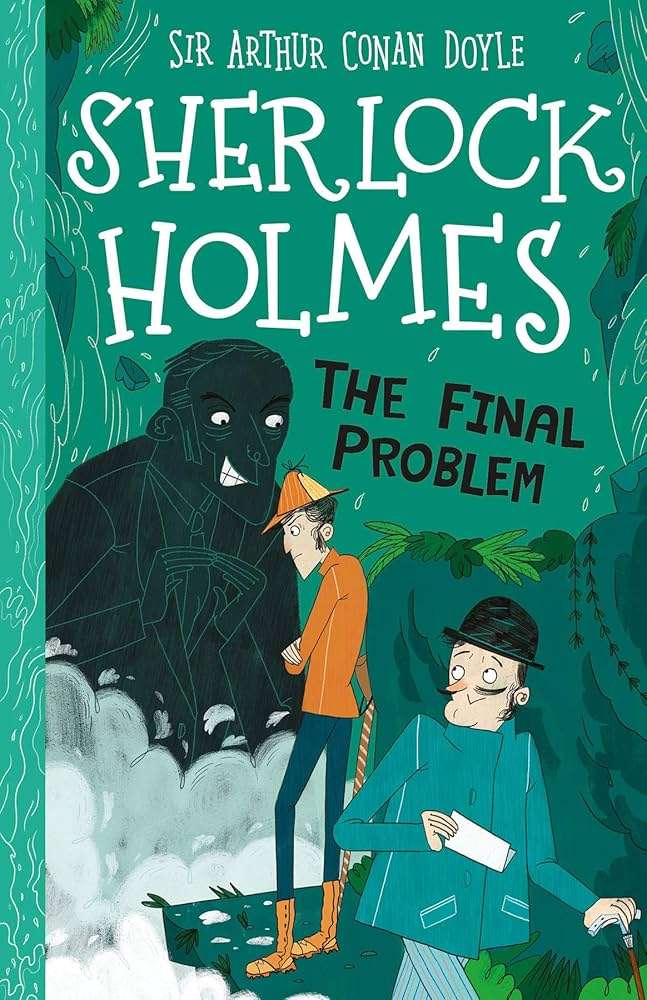
What he didn't anticipate was the scale of public grief that followed. The Strand Magazine, where the stories were published, lost subscribers in protest. Readers wore black armbands in mourning. Letters flooded Conan Doyle's desk, many of them furious. Public outcry contributed to Conan Doyle writing another Holmes story. Holmes returned in The Adventure of the Empty House and The Hound of the Baskervilles.
Many readers remember Sherlock Holmes as an unbeatable genius, but even Holmes himself admitted he was not infallible. He confessed to being outwitted four times: three by men and once memorably by a woman, Irene Adler.
![[Image Credit: Sherlock Holmes Official Website]](https://backend.thebrowser.org//media/images/Irene_adler_218dfb82-d552-4430-b.original.jpegquality-60.jpg) [Image Credit: Sherlock Holmes Official Website]
[Image Credit: Sherlock Holmes Official Website]There are also several cases where Holmes fails to save the client in time, and he even arrives at the wrong conclusion entirely. These rare failures are precisely what make Holmes such a compelling character. Beneath the brilliance lies a deeply human detective, capable of error, surprise, and humility.
Popular adaptations often portray Sherlock Holmes and Dr Watson as middle-aged gentlemen, seasoned by years of experience. But Arthur Conan Doyle originally imagined them as much younger men. Holmes, born in 1854, was only in his late twenties when Watson first met him in 1881. Watson himself had already served in the war and established a medical career, giving him an air of maturity beyond his years.
Their youth adds a fascinating layer to the stories. They weren’t ageing detectives looking back on glory days, but ambitious young men navigating danger, intellect, friendship, and the rapidly changing world around them.
Buy here: The Adventures of Sherlock Holmes
Many adaptations frame Holmes as a troubled addict. The reality in canon is more nuanced. Conan Doyle only observed that Holmes did not use drugs when working on a case, only to dispel boredom when he had nothing to do. When Watson criticises him in The Sign of Four, Holmes proclaims “my mind rebels at stagnation”, framing his drug use not as addiction, but as a mental aid for his genius. It's less “addict” and more “workaholic who can't stand doing nothing.”
Much of what the world thinks it knows about Sherlock Holmes has been shaped by stage actors, film studios, and creative liberties taken long after Conan Doyle's time.
Sir Arthur Conan Doyle was born on May 22, 1859, in Edinburgh, Scotland. It feels fitting to mark his birthday by doing what he'd have appreciated most: separating fact from fiction.
So the next time someone quotes "Elementary, my dear Watson" or pictures that deerstalker hat, smile, and let them know the real story. Conan Doyle would have wanted you to get the facts right.
Happy belated birthday, Sir Arthur. The game is still very much afoot.
Your next read: 8 Ruskin Bond Stories to Read on a Slow Afternoon (Ranked by Mood)