
 Jhumpa Lahiri's Minimalist Prose
There is a common misconception among aspiring writers that beautiful prose must be elaborate, that powerful stories are built with lush descriptions, dazzling vocabulary, and sentences that demand attention. But some of the most unforgettable writing achieves its impact in the opposite way. It whispers instead of shouting.
Few contemporary authors embody this better than Jhumpa Lahiri. Whether in Interpreter of Maladies, The Namesake, or Unaccustomed Earth, her prose is remarkably understated. She rarely relies on dramatic flourishes or lengthy descriptions. Instead, she crafts scenes with careful precision, allowing ordinary moments and seemingly insignificant details to reveal truths about love, identity, family, migration, and belonging.
For writers, her work teaches the art of saying more with less. In this article, we'll explore what writers can learn from Jhumpa Lahiri's minimalist prose—and how adopting some of her techniques can make your own writing clearer, more evocative, and ultimately more memorable.
Also Read: From One Voice to Many: Understanding POVs in Fiction Writing

One of the biggest misconceptions about minimalist writing is that it's easier to produce. If anything, it's the opposite. Writing simply requires ruthless editing and careful word choice. What makes Lahiri's writing so compelling isn't what she puts on the page; it's what she chooses to leave out. Her restraint creates space for readers to interpret emotions, notice subtle shifts in relationships, and connect deeply with her characters. Every sentence feels intentional, every detail purposeful.
For writers, this can be one of the hardest lessons to embrace. We often equate rich writing with rich language, adding layers of description in the hope of making our work more vivid. Lahiri reminds us that clarity is just as powerful. A well-chosen sentence can resonate far longer than a beautifully ornate paragraph.
One of the defining characteristics of Jhumpa Lahiri's fiction is its emotional restraint. Her stories are filled with longing, grief, loneliness, love, and joy, yet her characters rarely articulate these emotions directly. Instead, she allows them to surface through everyday interactions, subtle gestures, and reflective silences.
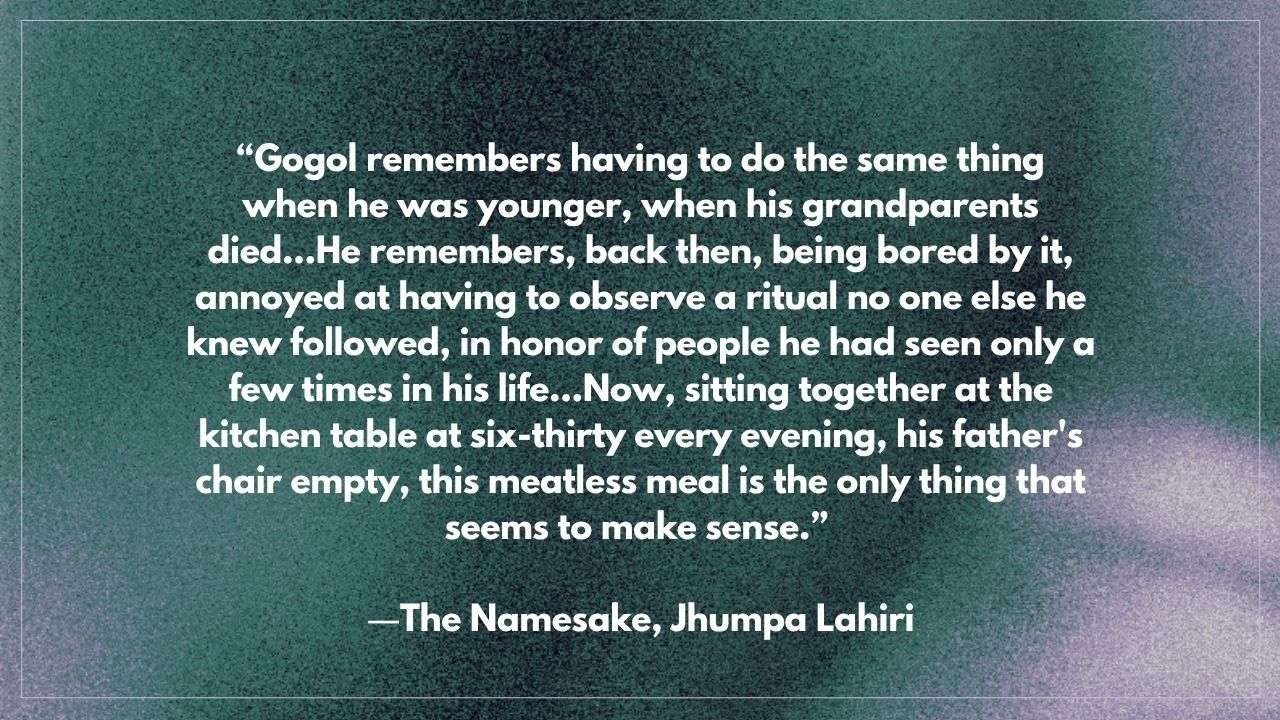
In The Namesake, much of the novel's emotional depth comes from ordinary family moments and routines, like a shared meal, a forgotten tradition, and a conversation. All of it gradually reveals the complexities of identity, migration, and belonging.
The restraint invites readers to participate in the story. Rather than being handed every feeling, they discover it themselves. The result is fiction that feels authentic, intimate, and deeply human.
One of Jhumpa Lahiri's greatest strengths is her ability to create rich, immersive worlds without relying on sweeping descriptions. Instead of cataloguing every aspect of a setting, she focuses on a handful of carefully chosen details such as a familiar café, the changing light in a city square, a neighbour's routine, or an object resting on a windowsill. These seemingly ordinary observations reveal a character's emotional landscape as much as the world they inhabit.

Nowhere is this more evident than in Whereabouts. Rather than driving the story through plot, Lahiri builds it through fragments of daily experience: walks through familiar streets, fleeting encounters with strangers, visits to parks and cafés, and subtle shifts in the changing seasons. These recurring details don't just establish a setting; they reflect the narrator's solitude, longing, and evolving relationship with the city around her. When details are chosen with intention, they don't merely decorate a scene; they become part of the story itself.
One of Jhumpa Lahiri's greatest strengths as a storyteller is her ability to make silence feel as meaningful as dialogue. Her characters rarely voice every thought or emotion. Instead, they hesitate, change the subject, or allow conversations to trail off unfinished.

This is beautifully demonstrated in The Lowland. The novel explores grief, guilt, and fractured relationships, yet its characters often struggle to articulate their feelings. Lahiri trusts readers to recognise that what remains unsaid can be just as revealing as what is spoken.
There are no high-speed chases or shocking plot twists in most of Jhumpa Lahiri's fiction. Instead, her stories revolve around characters and ordinary lives. Her works explore familiar experiences: family relationships, migration, loneliness, marriage, identity, and even the compromises people make every day. What makes these stories memorable is how she pays close attention to moments that many writers might overlook.
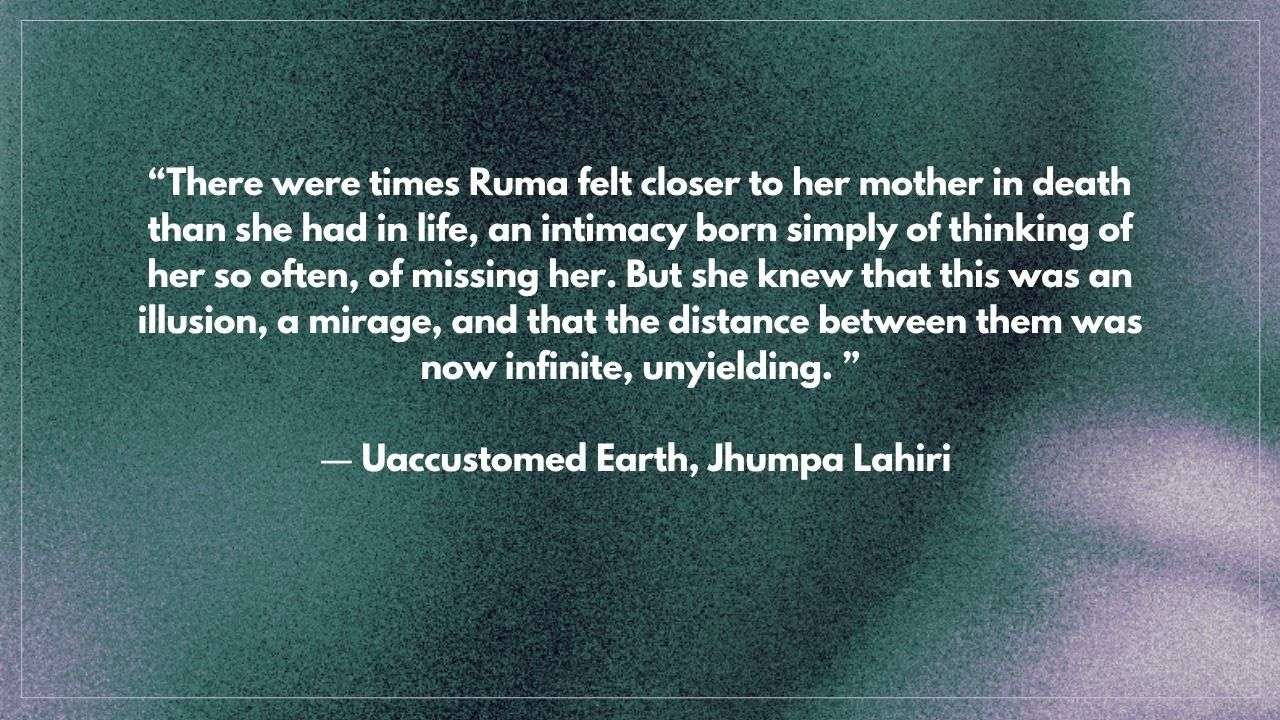
This is particularly evident in Unaccustomed Earth. Across the collection, Lahiri explores relationships as they evolve: a father and daughter learning to reconnect after loss, childhood friendships giving way to complicated adulthood, and families navigating the distance created by love, migration, and changing identities. The conflicts are deeply personal rather than dramatic, but they feel profoundly universal because they mirror experiences many readers recognise in their own lives.
Minimalism isn't about stripping your writing until it feels empty. It's about choosing clarity over clutter and trusting your readers to meet you halfway. Jhumpa Lahiri's work reminds us that powerful stories don't need elaborate prose or dramatic plots—they need honesty, precision, and emotional truth. As you write and revise, don't ask how you can add more. Ask how you can say the same thing with greater intention. Sometimes, the quietest sentence is the one readers remember long after they've finished the story.