
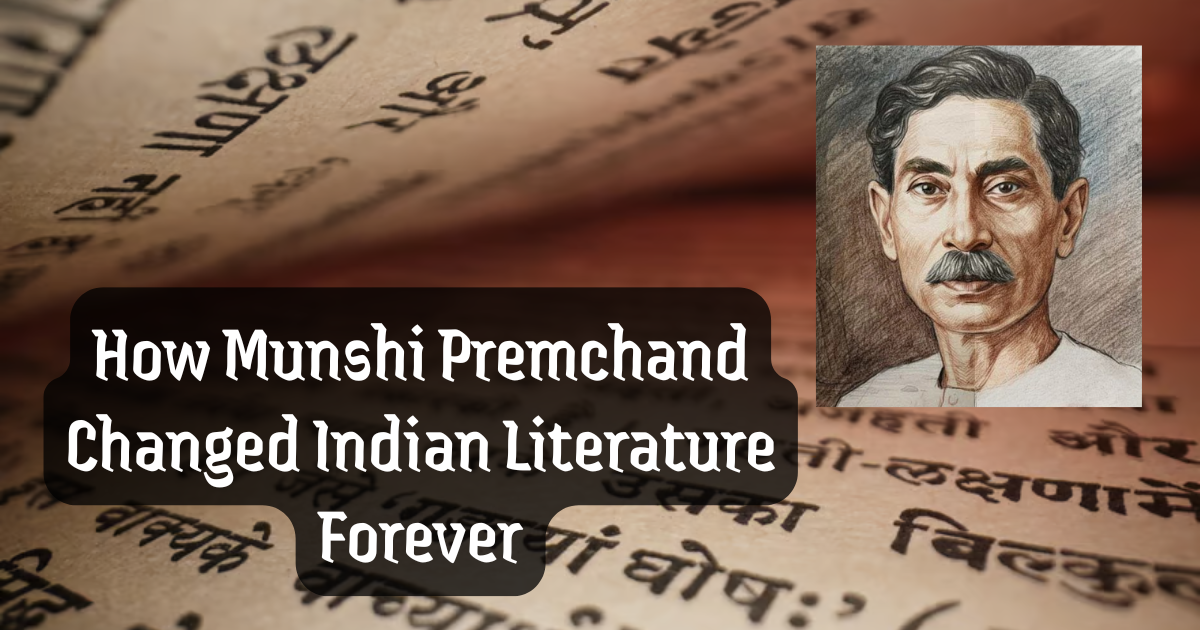
 Munshi Premchand
There are writers who entertain, writers who provoke, and writers who transform the way a society sees itself. Munshi Premchand belongs firmly in the last category. Long before literature became a vehicle for social commentary in modern India, Premchand was writing stories that forced readers to confront uncomfortable truths about poverty, caste, gender, greed, and justice. He did not create idealised worlds filled with flawless heroes. Instead, he gave voice to farmers struggling under debt, women trapped by oppressive customs, children navigating impossible choices, and ordinary people trying to preserve their dignity in an unequal society.
That is perhaps why, more than a century after he began writing, Premchand remains one of India's most relevant literary figures. His stories feel remarkably contemporary because the questions they ask have never truly disappeared.
Also read: Borders, Memory, and Belonging in Amitav Ghosh's Literature
Born as Dhanpat Rai Srivastava in 1880 in Lamhi, near Varanasi, Premchand grew up during British colonial rule. His childhood was marked by financial hardship, the early loss of his mother, and responsibilities that came sooner than they should have. These experiences shaped not only his worldview but also the emotional honesty that later defined his writing
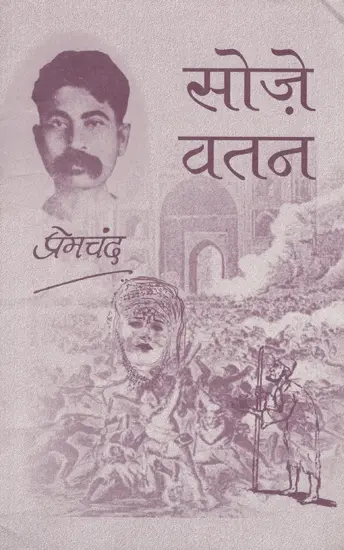
He initially wrote under the pen name ‘Nawab Rai’, but after one of his early collections, Soz-e-Watan, was banned by the British authorities for its nationalist undertones, he adopted the name by which the world now remembers him: Munshi Premchand.
Unlike many writers of his era, Premchand was never interested in writing solely for the educated elite. Whether in Hindi or Urdu, his goal was simple yet revolutionary—to write about India as it actually was.
Before Premchand, much of popular literature leaned toward romance, mythology, fantasy, or aristocratic life. Premchand shifted the spotlight entirely.
His protagonists were not kings or warriors but peasants, widows, labourers, teachers, clerks, and children. They lived in villages rather than palaces. Their victories were rarely dramatic; often, survival itself was an achievement.
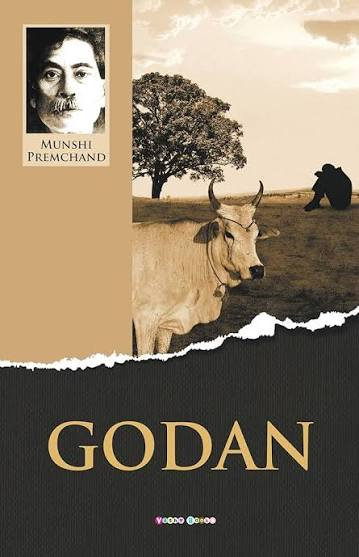
Take Godaan, widely regarded as his masterpiece. At its centre is Hori Mahato, a poor farmer whose lifelong dream is simply to own a cow—a symbol of prosperity and respect. Yet debt, exploitation, and social expectations slowly crush his aspirations. The tragedy of Godaan lies not in extraordinary events but in the crushing weight of an unjust social system.
In making such lives worthy of literature, Premchand forever expanded the idea of a worthy protagonist in Indian novels.
Premchand believed stories should do more than entertain. They should reveal.
His novels and short stories explored social issues with remarkable depth without reducing them to lectures. Instead of telling readers what to think, he invited them to witness lives shaped by systemic inequality.
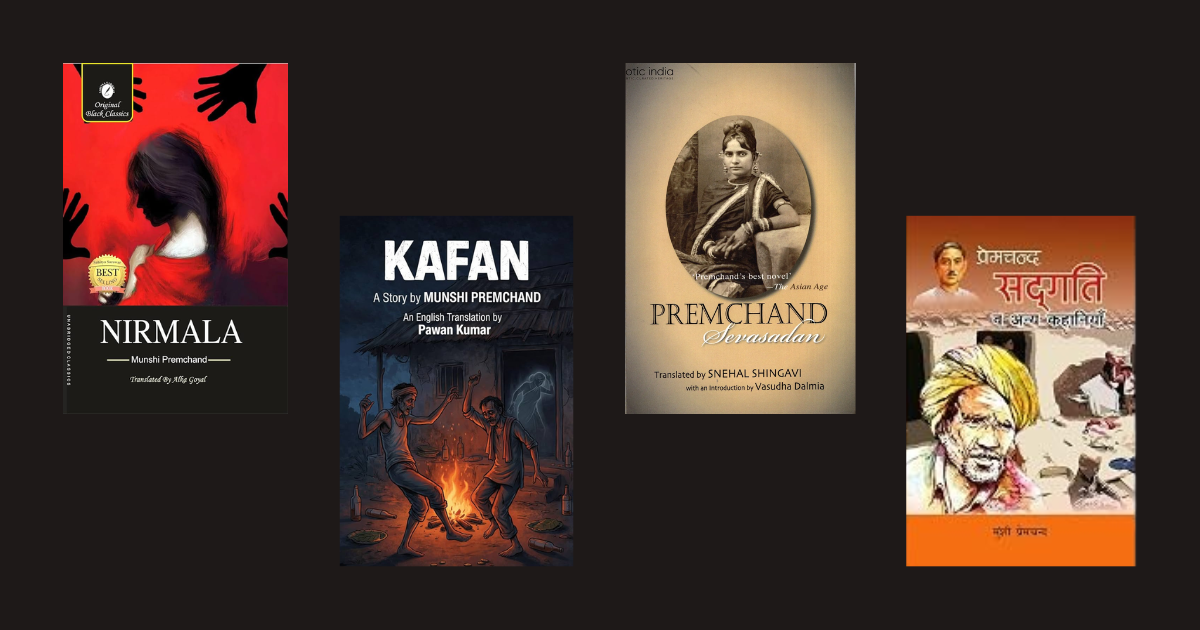
In Nirmala, he examined the devastating consequences of child marriage and dowry. In Sevasadan, he questioned the social treatment of women and the hypocrisy surrounding morality. Stories like Sadgati confronted caste oppression with heartbreaking clarity, while Kafan exposed how poverty can distort human relationships in unimaginable ways.
These were not abstract debates. They were deeply human narratives that made readers emotionally invest in issues they might otherwise ignore.
Premchand understood that empathy could sometimes achieve what arguments alone could not.
One of Premchand's greatest contributions was linguistic.
At a time when literary writing often relied on ornate language, he embraced clarity and simplicity. His prose flowed naturally, drawing from everyday speech while retaining remarkable elegance. This accessibility allowed readers from diverse educational backgrounds to connect with his work.
Yet simplicity never meant superficiality.
Behind every straightforward sentence was psychological insight, moral complexity, and subtle irony. Readers could enjoy his stories without academic training, but scholars continue discovering new layers within them today.
His writing demonstrated that great literature does not require complicated language. It requires profound understanding of human nature.
Many writers of the early twentieth century portrayed women either as idealised figures of sacrifice or as moral cautionary tales. Premchand offered something far more nuanced.
His female characters possess intelligence, agency, frustration, compassion, and contradictions. They struggle within deeply restrictive social structures while attempting to shape their own destinies.
Characters such as Nirmala or Suman are neither saints nor villains. They are products of the societies they inhabit, forced to make impossible decisions.
Although Premchand wrote within the limitations of his time, his willingness to engage seriously with women's lives made his fiction significantly more progressive than much of his contemporary literature.
Premchand is often called the father of modern Hindi fiction, and much of that reputation rests on his realism. But realism alone does not explain his enduring appeal.
His stories never descend into cynicism.
Even when depicting exploitation or suffering, he approaches his characters with extraordinary compassion. There are no simple heroes or villains. Landlords may possess moments of humanity. Poor characters sometimes make morally questionable choices. Social injustice is shown as a web of economic, cultural, and historical forces rather than the result of individual cruelty alone.
This refusal to flatten people into stereotypes gives his fiction remarkable emotional depth.
Readers may disagree with a character's decisions, but they almost always understand why those decisions were made.
Premchand's influence reaches far beyond the pages of his own books.
Generations of Indian writers inherited his commitment to social realism, whether writing in Hindi, Urdu, Bengali, Malayalam, English, or other Indian languages. His stories have inspired countless films, television adaptations, stage productions, and academic studies. Filmmakers such as Satyajit Ray brought works like Sadgati and Shatranj Ke Khiladi to the screen, introducing new audiences to Premchand's powerful storytelling.
More importantly, he changed readers' expectations of literature itself.
After Premchand, fiction could no longer remain comfortably detached from society. It had proven that stories about ordinary lives could be every bit as compelling—and infinitely more meaningful—than tales of extraordinary people.
Munshi Premchand did far more than write memorable novels and short stories. He redefined the purpose of literature in India. He showed that fiction could illuminate injustice without losing its artistry, inspire compassion without becoming sentimental, and challenge social norms without sacrificing compelling storytelling.
In an age obsessed with spectacle, Premchand reminds us that the most extraordinary stories often emerge from ordinary lives. His farmers, widows, labourers, and children continue to speak across generations because they represent something universal: the quiet resilience of people striving for dignity in an imperfect world.
That is why Munshi Premchand did not simply contribute to Indian literature—he changed its direction forever.
Your next read: What Writers Can Learn from Jhumpa Lahiri's Minimalist Prose