
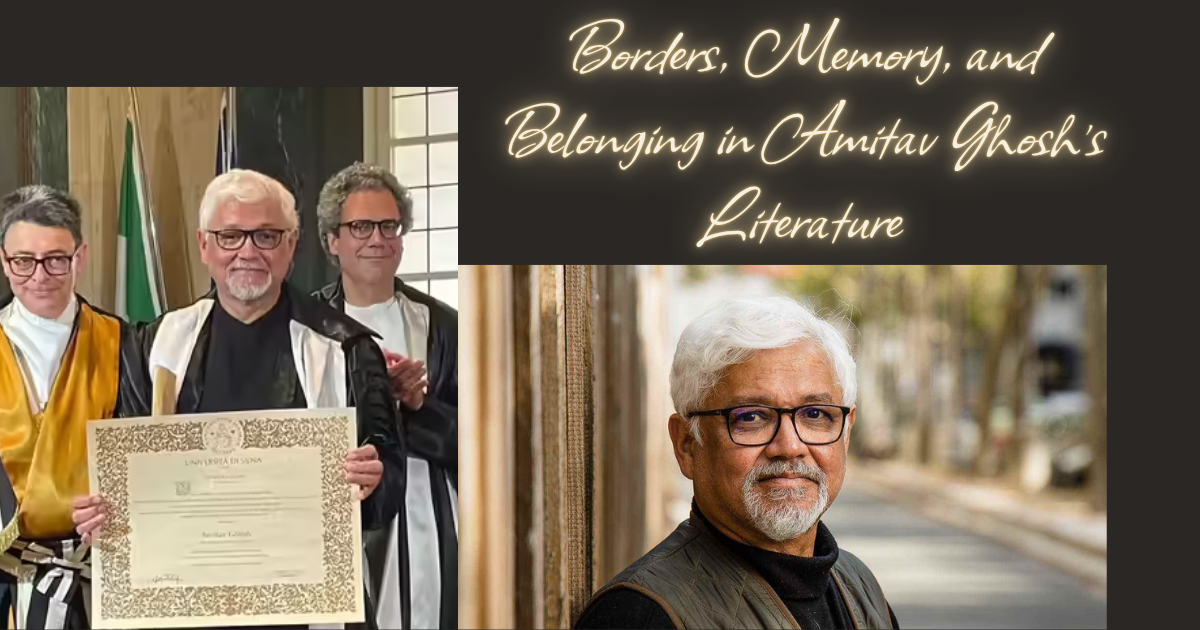
 Amitav Ghosh
Some writers tell stories about places. Others tell stories about people. But in the works of Amitav Ghosh, places and people are inseparable. His novels ask a profound question: What happens when borders divide lands but cannot divide memory? Time and again, Ghosh returns to the invisible lines that shape human lives—national boundaries, cultural identities, family histories, and the memories that survive long after maps have been redrawn.
Whether he is writing about the Partition of India, colonial trade routes, migration across oceans, or communities threatened by climate change, Ghosh reminds readers that belonging is rarely simple. It is inherited, questioned, lost, and rediscovered. His literature suggests that home is often less about geography than about the stories people carry with them.
Many of Ghosh's novels begin with physical journeys, but they quickly become emotional ones. Characters cross countries, rivers, and oceans, only to discover that the hardest borders to cross are the ones history leaves behind.
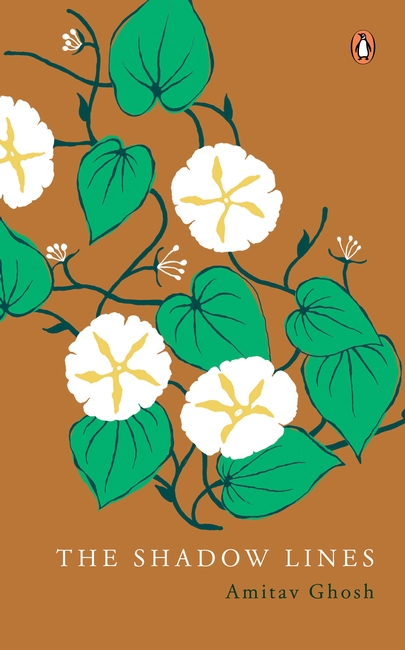
Perhaps nowhere is this clearer than in The Shadow Lines. Rather than treating borders as permanent realities, the novel questions their very existence. The narrator moves between Kolkata, London, and Dhaka, revealing how cities separated by national boundaries remain connected through shared histories and personal memories.
The novel's title itself is symbolic. Borders, Ghosh suggests, are often ‘shadow lines’—political constructions that appear solid on maps but are far more fragile in lived experience. Families, friendships, and cultural traditions refuse to fit neatly within national divisions.
The Partition of India and the creation of Bangladesh become more than historical events; they become reminders that political decisions can reshape lives overnight while leaving emotional ties intact.
In Ghosh's fiction, memory functions almost like another character. It refuses linearity. It travels across generations, resurfaces unexpectedly, and often challenges official versions of history.
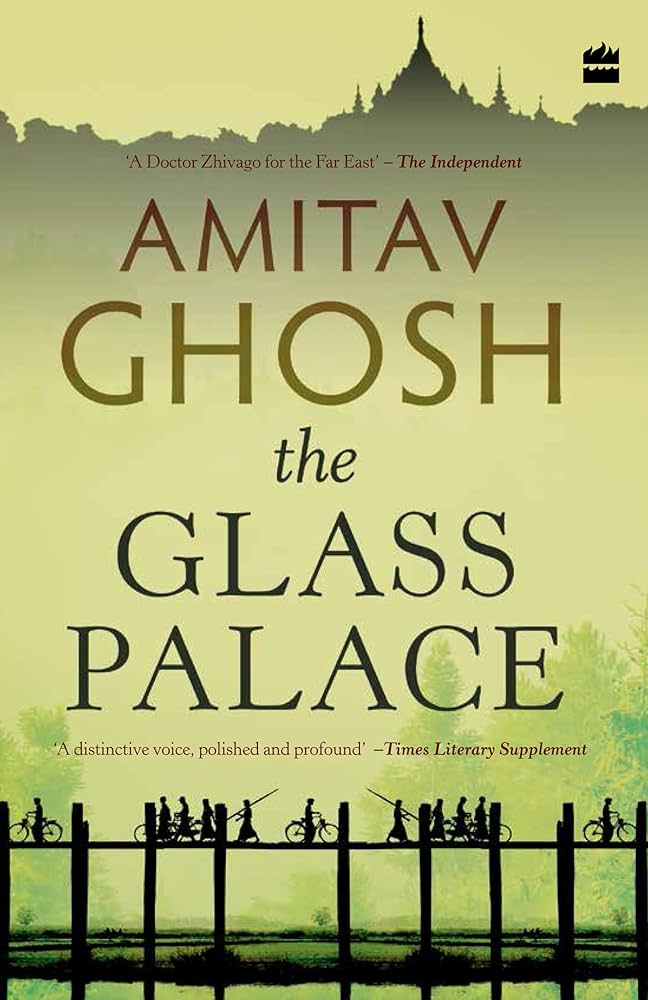
In The Glass Palace, personal memories intersect with the histories of colonial Burma, India, and Malaya. The novel spans decades, following families whose lives are transformed by imperial conquest, war, and displacement. Rather than presenting history as a sequence of dates, Ghosh tells it through remembered conversations, inherited objects, and family stories.
This approach gives ordinary people a central place in history. Kings, soldiers, traders, and servants all become part of the same historical tapestry because memory does not distinguish between the famous and the forgotten.
Reading Ghosh often feels like listening to elders recount family stories—stories that gradually reveal larger truths about nations and empires.
Few themes recur as consistently in Ghosh's writing as the search for belonging. His characters frequently live between cultures, languages, and identities, resisting simple labels.
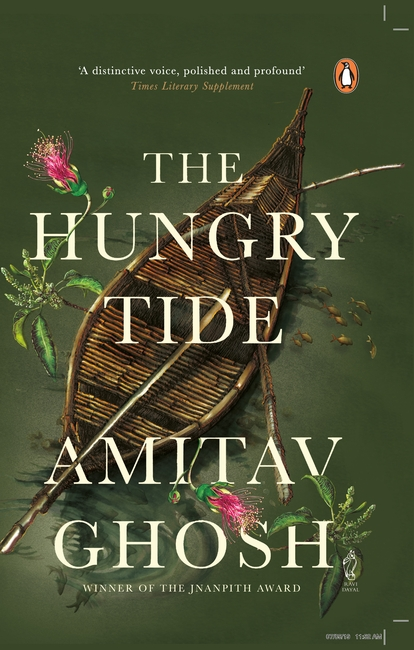
In The Hungry Tide, the Sundarbans become a meeting point for people from vastly different backgrounds: a marine biologist returning from America, a local fisherman, and a translator navigating multiple languages and worlds. Each character belongs somewhere—and nowhere entirely.
The landscape itself mirrors this uncertainty. The shifting tides constantly redraw the boundaries between land and water, echoing the fluid identities of the people who inhabit the region.
Belonging, Ghosh suggests, is not about fitting into a single category. It is created through relationships—with people, with language, and with place—even when those relationships remain fragile.
It is easy to think of oceans as vast distances separating civilisations. Yet the opposite is true. Covering over 70% of the Earth's surface, the world's oceans have long served as humanity's greatest highways, linking continents through commerce, migration, culture, and memory. Ghosh embraces this perspective, portraying the sea not as an empty expanse but as a living archive of human connection.
Unlike many writers who focus primarily on nations, Ghosh often looks toward the sea. Oceans in his novels are not barriers but highways of exchange, connecting cultures long before modern globalization.
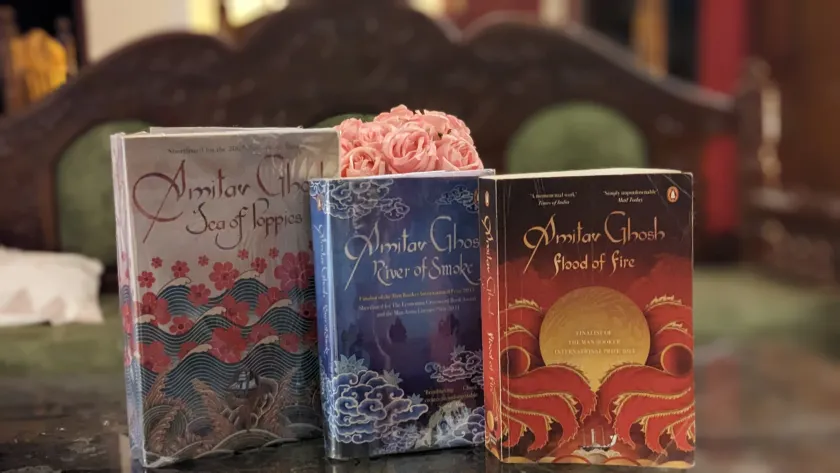
The Ibis Trilogy—comprising Sea of Poppies, River of Smoke, and Flood of Fire—explores the vast networks linking India, China, Mauritius, and the British Empire during the nineteenth century.
Merchants, indentured labourers, sailors, and refugees cross the Indian Ocean carrying languages, religions, cuisines, and memories. Their identities become layered rather than fixed.
By focusing on maritime history, Ghosh challenges the idea that civilisations developed in isolation. Instead, he portrays the ocean as one of humanity's oldest spaces of cultural interaction, where belonging is constantly negotiated rather than permanently settled.
One of Ghosh's greatest strengths is his ability to recover histories that rarely appear in textbooks.
His novels pay close attention to migrants, labourers, translators, prisoners, and ordinary families whose experiences shaped history but were often overlooked. Colonialism, trade, war, and displacement are explored from below rather than from the perspective of rulers.
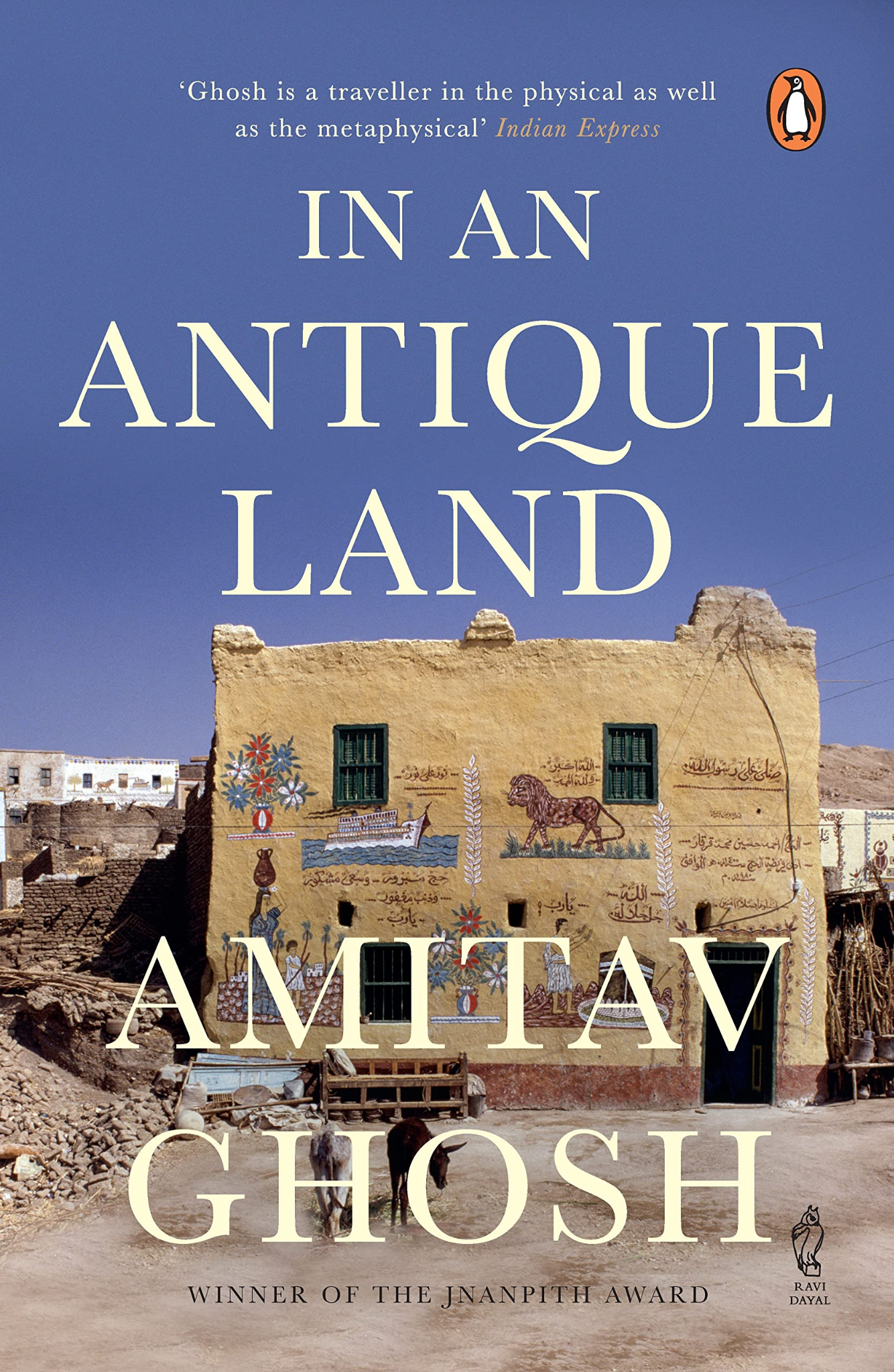
This commitment extends beyond fiction. In In an Antique Land, Ghosh combines anthropology, memoir, and historical research to reconstruct forgotten connections between medieval Egypt and India. The result is neither conventional history nor conventional travel writing, but something uniquely his own—a reminder that history is made up of countless interconnected lives.
His works encourage readers to question whose stories become official history and whose memories quietly disappear.
In today's world, conversations about migration, refugees, identity, nationalism, and climate change dominate global discourse. Ghosh's novels, many written decades ago, feel remarkably contemporary because they refuse simplistic answers.
His characters demonstrate that identities are never singular. A person may belong to several cultures, carry multiple languages, inherit conflicting histories, and still struggle to answer a simple question: Where is home?
Increasingly, Ghosh has also explored how environmental crises reshape ideas of belonging. Rising seas, disappearing coastlines, and changing climates threaten not only homes but also the memories attached to them. When landscapes vanish, entire cultural histories risk disappearing with them.
His literature reminds us that belonging is not only political or personal—it is ecological as well.
Reading Amitav Ghosh is an invitation to look beyond maps. His novels reveal that borders may separate countries, but they rarely separate memories. Families continue to remember places they can no longer visit. Languages survive across generations. Oceans connect lives that politics tries to divide.
In his world, history is never distant, and identity is never fixed. Every journey becomes a conversation between past and present, every landscape holds forgotten stories, and every act of remembering becomes an act of reclaiming belonging.
That is why Ghosh's literature continues to resonate across cultures. It reminds us that while nations draw borders, human lives rarely stay within them. The deepest connections are often the ones that transcend geography, living on in memory, storytelling, and the enduring search for a place to call home.
Your next read: 8 Ruskin Bond Stories to Read on a Slow Afternoon (Ranked by Mood)